Cirerers, imatges d'una construcció
O.S. Feature FilmsAna Valeria de Ormaechea, Santiago González Plá, Cirerers Habitatge CooperatiuPresented by the collective26.10.2320:30 h Zumzeig Cinecooperatiu 8€
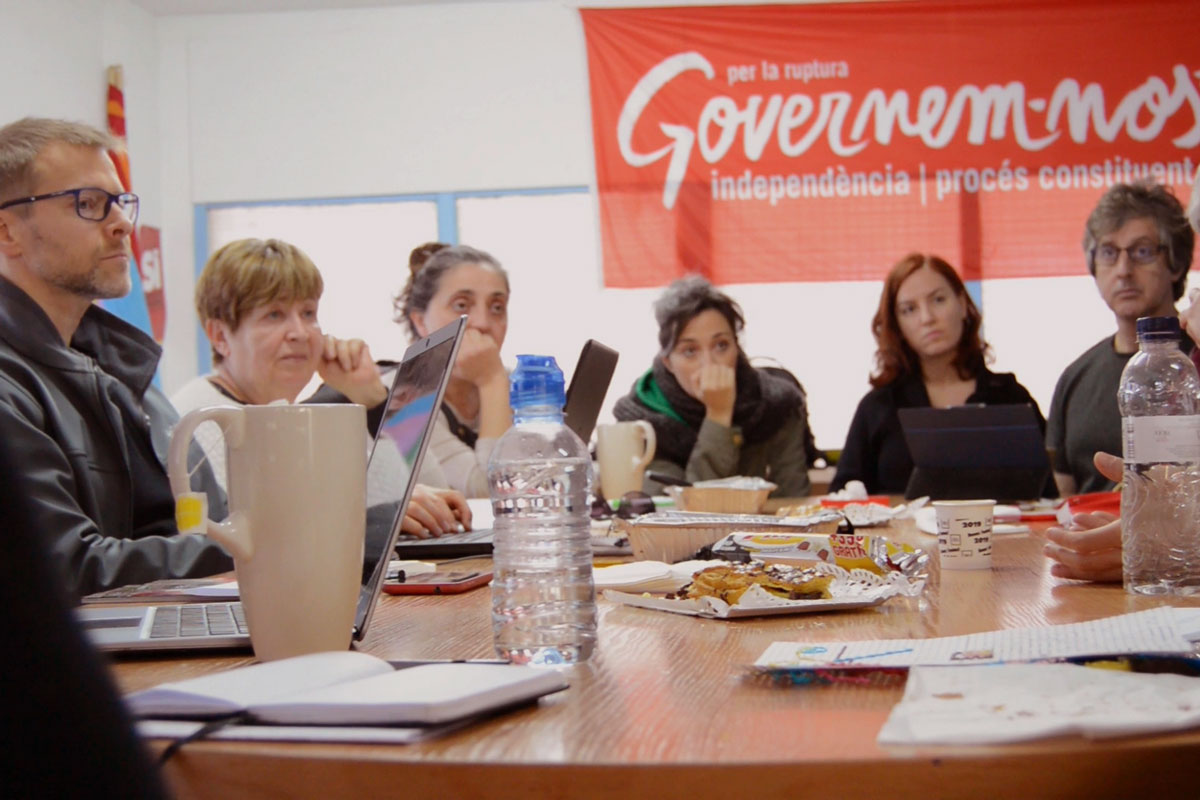
In 2016, the Barcelona City Council allocated plots of land to cooperative housing projects. One of these plots of land was assigned to Sostre Cívic, to be used for 27 units of social housing in the Roquetes neighbourhood of Barcelona. The driving group, Cirerers, was set up in September, 2017. The documentary gaze accompanies the members of the cooperative in their debate about access to decent housing in Barcelona’s neighbourhoods, which are becoming more and more gentrified, the value of communal space and the need to return to taking care of the community as a way to combat the financialization of life. In March, 2022, Cirerers was inhabited by 32, co-living units.
Biography
The components of the technical-expressive team are part of the promoting group, Cirerers. They have made documentaries linked to Latin American social struggles and movements. Their field of action has mainly been participatory and ethnographic documentary. They have received awards from the Buenos Aires Human Rights Documentary Festival in 2001, from the UNCIPAR Argentinean union of filmmakers, in 1994, and from UNICA, the international union of independent film, in 1995.
Details
Duration: 93 min
Direction: Ana Valeria de Ormaechea and Santiago González Plá
Production: Cirerers Habitatge Cooperatiu
Country: Spain
Language: Catalan, Spanish
Version:
Direction: Ana Valeria de Ormaechea and Santiago González Plá
Production: Cirerers Habitatge Cooperatiu
Country: Spain
Language: Catalan, Spanish
Version:
Metodology
The documentary was filmed over the five years in which the Cirerers community was gestated and set up. It was filmed from the inside, with the aim of offering a unique vision of the process. The participants were: a co-living unit, who took on the technical-expressive roles; five co-living units, who took an active role in the creation and scripting of their own, audiovisual portraits; and the entire group of cooperative members, who were open to representing the reality of their struggle and co-living. The documentary is self-managed in its entirety.