Challenge for Change
Biography
In 1967, Tanya Ballantyne's film The Things I Cannot Change aired on Canadian television. It sparked significant controversy due to its portrayal of a poor family in Montreal. Since the family was not able to decide whether to produce or distribute it, they lost control of their own image and ended up being ridiculed by their neighbors.
This situation motivated the creation of Challenge for Change, an initiative of the National Film Board of Canada that championed collaborative filmmaking as a tool for empowerment and social transformation.
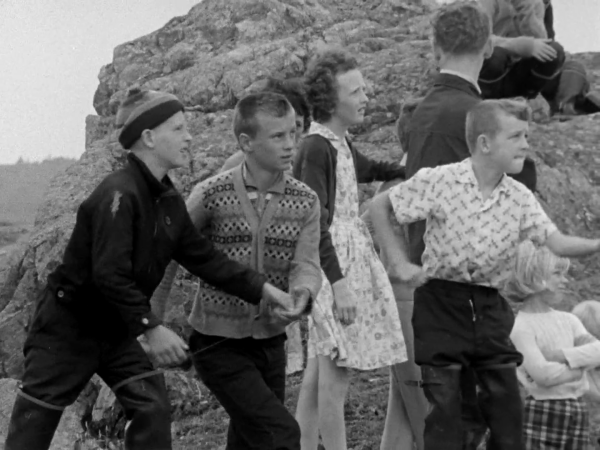
Fogo Process, Challenge for Change's first project, was developed in 1967 on Fogo Island, an isolated community in northeastern Canada with approximately 5,000 inhabitants. Colin Low, filmmaker and project facilitator, discovered that, in the absence of authorities, residents expressed different, generally pessimistic opinions. This led him to conclude that only by allowing the community to speak would it be possible to understand their reality and needs. The Fogo project, facilitated by Colin Low, led to the production of several films portraying the inhabitants' customs, visions, and daily lives.
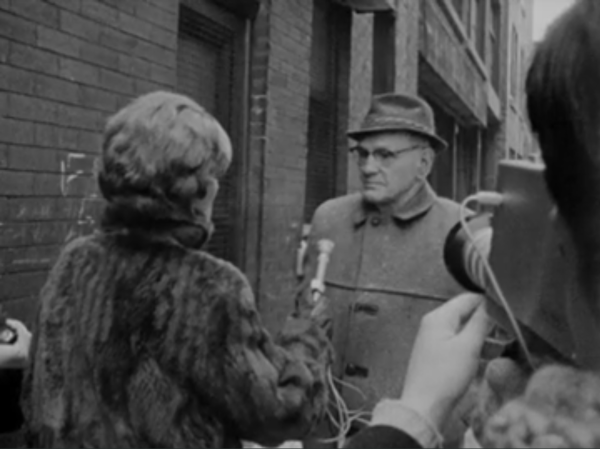
This first project was followed by others within the Challenge for Change framework, such as Saint-Jérôme, carried out by Fernand Dansereau in 1968. Here, Dansereau sought from the outset to give control of the film to its participants, allowing them to modify, delete, or reframe the images and content during filming. A similar experience was that of director Bonnie Sherr Klein in 1969, Operation boule de neige, who followed the citizens' committee in the Montreal neighborhood of Saint-Jacques.
Also notable from Challenge for Change was the formation of the Indian Film Crew, a team of Indigenous filmmakers that emerged after the production of The Ballad of Crowfoot (1968). Aimed at the Micmac community, the film denounces colonialism through archival footage and marked the beginning of a series of films made by and for Indigenous peoples. This experience sought to replace the external gaze of white filmmakers with an internal perspective.
Methodology
As a framework project, each Challenge for Change initiative developed its own methodology, adjusted to the specific needs and contexts of the participating communities. Although there was no single model, certain common processes and methodological principles were shared across the different experiences.
In the Fogo Process, after a series of meetings that laid the foundations for the production process, it was agreed to record transparently and to continuously show the material to the community, who would decide which materials to keep and which to discard. Editing was horizontal, promoting debates about representation and its consequences. These meetings generated collective reflection and became as relevant as the films themselves. In addition to the impact the films could have, the attitude of the islanders toward reflecting on their own reality and capacity for action was of great importance.
From the outset, Fernand Dansereau proposed relinquishing control of the film to the participants, allowing them to intervene in the entire process, from recording to editing. Filming for Saint-Jérôme began once a relationship of mutual trust was established between the facilitator and participants. In this way, Dansereau understood that the film flowed better when listening without intervening, as directing could involve a form of manipulation. During editing, screenings were held with the participants to collectively review and adjust the material.
In Operation Boule de Neige, the Saint-Jacques neighborhood committee was responsible for editing the collected materials. The pieces were screened for the community, generating spaces for discussion about representation, shared concerns, and possible collective improvements. This active, collective viewing served as a catalyst for reflection on various issues affecting the community.
Challenge for Change's methodologies shared principles such as the active participation of communities in all stages of the process, collective control over the audiovisual content, and the use of screenings as spaces for dialogue and reflection. The role of the facilitator replaced that of the traditional director, promoting a horizontal and collaborative production.
Filmography
The Kids of Fogo Island (1967)
Through a montage of silent images, the film presents a series of everyday scenes from the perspective of children living on Fogo Island. They play and live.
Some Problems of Fogo (1967)
The inhabitants of Fogo Island share their daily concerns and reflect on their future. This reflection addresses topics such as fishermen’s unions, the fishing industry, social assistance, and education.
The Founding of the Co-operatives (1967)
This film documents a meeting held to establish Fogo Island’s shipbuilding cooperative, along with other local producers.
Saint-Jérôme (1968)
A documentary about how a community confronts the effects of technology through class solidarity, mediation, and social participation.
The Ballad of Crowfoot (1968)
A musical short film that exposes the colonial traditions imposed on Indigenous Canadian communities.
Operation Boule de Neige (1969)
In this film, the citizens' committee of Montreal’s Saint-Jacques neighborhood records and presents local issues to spark community reflection.