Octubre Cinema

Biography
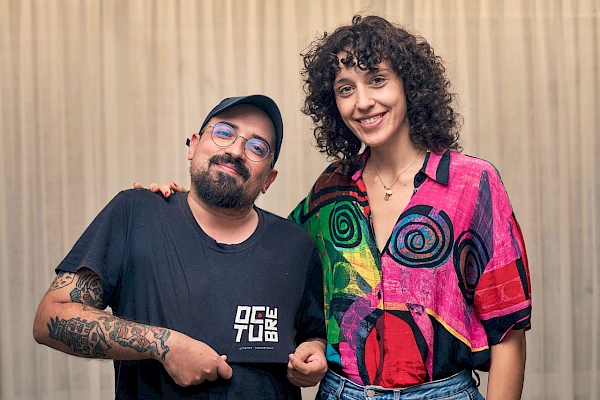
The cooperative born from a desire to build community, tell stories rooted in the local territory, and offer a fresh perspective within the film scene—one that moves away from the central production hubs of Madrid and Barcelona.
With a strong commitment to cultural decentralization and narrative sovereignty, Octubre Cinema is rooted in the western Catalan region, where it aims to develop a cooperative production model that is both creatively free and dedicated to social transformation. This inclusive approach is reflected both in its understanding of cinema and in the stories it chooses to tell.
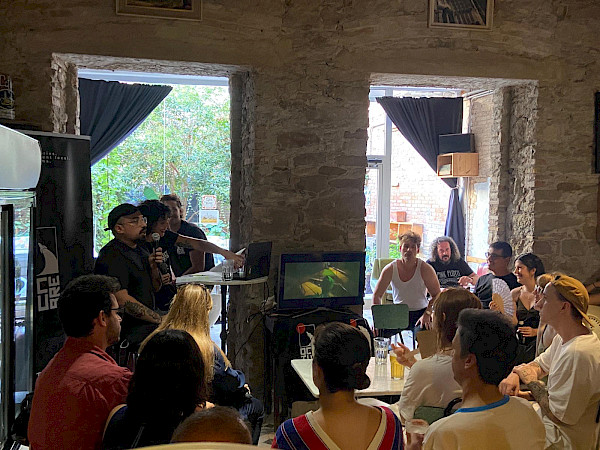
In its first year of existence, the collective has combined the production of original content—including short films, feature films, and projects by diverse authors—with services for companies, institutions, and other cultural initiatives. It has collaborated with festivals such as Som Cinema and Galacticat, and has promoted unique events such as Birrafòrums and Tastacurts, hosted at Screenbox Lleida, creating spaces where creators and audiences can come together.
Equally committed to audiovisual education and outreach, the cooperative organizes film courses and workshops open to all audiences, aiming to broaden access to creative tools and foster a critical, participatory community.
With a young but dynamic history, Octubre Cinema is establishing itself as an emerging and necessary voice in contemporary Catalan cinema.
Methodology
Octubre Cinema understands cinema as a collective and critical process rooted in the local territory. Its approach combines original creation, collaboration with other cultural agents, and audiovisual training, all within a cooperative and open working model based on collective decision-making.
The organization operates through horizontal structures, integrating the diverse perspectives of its team from development through to production. Its original productions explore social, political, and cultural themes from a variety of viewpoints. Notable examples include El hombre que mató a Terry Gilliam (Joel Munu, 2024), a piece that uses humor and meta-narrative to question dominant cinematic narratives; Niña beata (Marina Rúbies, release date TBA), a symbolic exploration of family, memory, and religion; and Entre mitgeres (2025), a short fiction film directed by Andreu Oliva that portrays the daily life of rural communities and the emotional distance between a father and son.
Octubre Cinema also supports external projects and collaborates with cultural and social initiatives, producing content for organizations such as Mangrana magazine, the Xarxa de Cures, and El Garrotín de Lleida. These commissions strengthen the collective’s connection to the region and allow it to place audiovisual tools at the service of projects with shared values.
In the field of training, Octubre Cinema promotes courses, workshops, and creative labs that are open to diverse audiences. It collaborates with festivals such as Som Cinema and actively participates in training and outreach spaces focused on regional filmmaking.
Its model is grounded in cooperation, territorial rootedness, and creative freedom, with the ambition of building a cinema from Western Catalonia for the world.
Filmography
FEATURE FILMS:
El hombre que mató a Terry Gilliam (Joel Munu, 2024) Premiered at Bogoshorts 2024 and at Festival de Cinema de Moscú 2025
#TocarFondo (Joel Munu, 2024) Best Actor Award at Rueda con Rueda 2024
Irrelevante (Joel Munu, 2024) Best Feature Movie Award at Festival Notodo 2025
Entre mitgeres (Andreu Oliva, 2025)
Empanada (coproducció amb La Magua Films, Marina Rúbies and Daniasa, TBA)
Nena beata (Marina Rúbies, TBA)
DOCUMENTARY FILMS:
Metavers Octubre x Mangrana (2024)