Escola Popular de Cinema de Barcelona
Biography
While his work drew on the classic traditions of participatory videomaking, Bogleux also found inspiration in screenwriter and film theorist Cesare Zavattini. He revived several of Zavattini’s ideas around cinema as a means of portraying social reality. This perspective, closely aligned with Italian neorealism, ran through his work with the Escola Popular de Cinema, where film was conceived as a way to bring collective stories to light and spark community reflection.
The Escola Popular de Cinema de Barcelona described itself as follows: A non-formal educational project focused on audiovisual media and participatory videomaking, aimed at grassroots networks and working-class neighbourhoods across the city. The project’s goal is to use film as an artistic tool for transformation and social inclusion.
The project carried out a range of initiatives in districts such as Sants, Nou Barris, Bon Pastor, El Raval, El Gòtic and La Ribera, and also extended its work into several local schools. Through these efforts, it promoted participation and audiovisual learning among young people and other community members. The films and videos produced explore stories from these neighbourhoods and the lived experiences of young migrants who have made their lives there, touching on their needs, school experiences and daily challenges. They offer perspectives shaped from within, giving voice to the communities responsible for bringing these productions to life.
As part of its wider activities, the project took part in initiatives such as Regards2Banlieue – Europe, which brought together associations specialising in independent videomaking and audiovisual training for social change from across Europe. The aim was to foster creative exchange among vulnerable young people living in the suburbs. Through the production of video reports, participants were able to share their experiences and skills.
Workshops at the Escola Popular de Cinema de Barcelona continued until 2018, when this particular phase of the project came to an end.
Methodology
The Escola Popular de Cinema de Barcelona ran workshops ranging in length from a few days to several months. The goal of these workshops was clear: to empower participants to take creative and practical ownership of audiovisual language and its technical foundations, using the tools of participatory videomaking. More than simply spaces for artistic expression, they also became platforms for exploring and reflecting on pressing issues such as cross-cultural understanding and social inclusion.
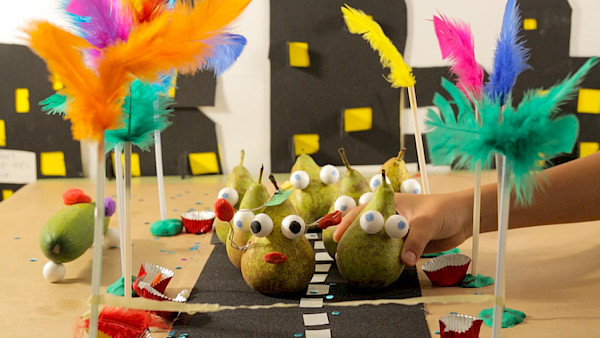
Participants in these workshops engaged with a wide variety of formats, from documentary and reportage to music videos, stop-motion and animation. According to those behind the project, the latter three played a particularly important role in the personal and artistic development of younger participants, offering them a hands-on introduction to the techniques of animated filmmaking. What’s more, the children took the lead throughout the entire creative process, from scriptwriting and animating to editing and sound design, all under the guidance and support of Alberto Bogleux, who acted as facilitator.
Alongside its neighbourhood-based projects—which centred on recovering local memory and reflecting on processes of social change—and its work in schools, the Escola Popular de Cinema de Barcelona also developed initiatives with more targeted goals around social integration.
One such initiative was De deu a una [From Ten to One], a job-placement initiative for at-risk youth in the Nou Barris district of Barcelona. It offered audiovisual workshops to a multicultural group of young people facing educational challenges, and for some, it became a stepping stone toward further training in the field. Another example was Sueños del Mediterráneo [Mediterranean Dreams], a four-month participatory videomaking workshop held in Barcelona, focused on intercultural realities and the experiences of migration.
Filmography
- Sueños ilegales (2010)
Ibrahima and Mamadou, two young migrants, share their experiences of life in Barcelona as former “top manta” street vendors.
- Sueños de mujeres. Telaraña (2010)
A group of Latin American women recount their experiences of living in Barcelona.
- Retratos de Nou Barris (2013)
A short documentary exploring the history of Nou Barris—how the neighbourhood has evolved over time and how its residents have changed with it, giving rise to a community enriched by cultural diversity.
- Can Battló (2014)
The story of one of the largest industrial complexes in the municipality of Barcelona, part of which has been occupied and restored by local residents for community use.